Atoms Dropped on China's Tiangong Station Confirm Einstein's Gravity Theory
Written by AI from sciencenews.org's report. Not checked by a person.
Scientists used two clouds of rubidium atoms with different masses aboard China's Tiangong space station to confirm — with quantum precision — that all objects fall at identical rates, a cornerstone of Einstein's general relativity.
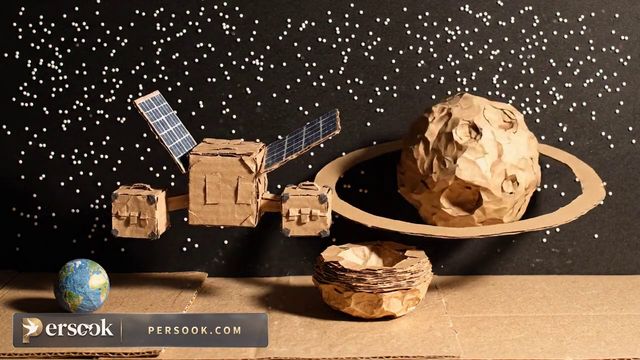
A team of physicists recreated Galileo's famous gravity experiment aboard China's Tiangong space station, but instead of weights dropped from a tower they used two clouds of cold rubidium atoms whose nuclei contained different numbers of neutrons, giving them slightly different masses. Reported on August 28 in Science Advances, the experiment measured the acceleration of both clouds simultaneously as they fell freely inside the station's microgravity environment. The two clouds matched in acceleration to within 0.05 thousandths of a percent — an extraordinary level of precision. The result affirms the weak equivalence principle: the idea that gravitational mass and inertial mass are equivalent regardless of an object's composition. This principle is a foundational pillar of Albert Einstein's general theory of relativity, which describes gravity as the warping of spacetime. Previous equivalence-principle tests in space used macroscopic metal cylinders on a satellite; this experiment extended that work to quantum objects such as atoms in an orbital environment. The extended free-fall periods possible in orbit allowed for greater measurement accuracy than ground-based laboratories, where objects can only fall so far, can achieve.