NASA completes instrument calibration for Hydrosat Osiris satellites
Written by AI from nasa.gov's report. Not checked by a person.
NASA says it finished calibration testing on Oct. 30 for the instruments of Hydrosat Osiris, a planned fleet of four Earth-imaging satellites. The tests were run at NASA's Goddard Space Flight Center in Maryland.
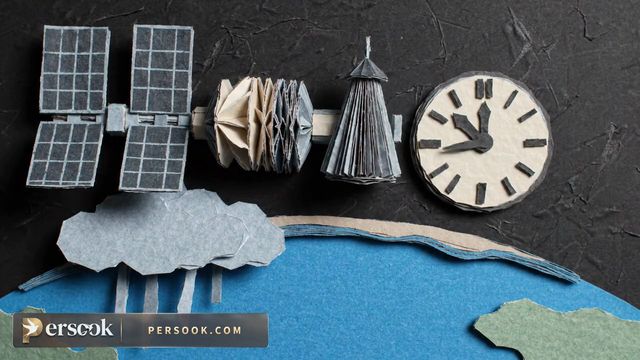
NASA says it completed instrument calibration for Hydrosat Osiris on Oct. 30. Osiris is a fleet of four satellites that will image Earth's surface from space. Each refrigerator-sized satellite will carry visible-near-infrared and long-wave-infrared sensors. According to NASA, the data could be used for purposes ranging from monitoring crop health to assessing infrastructure damage after hurricanes.
Hydrosat's visible-near-infrared cameras arrived at NASA's Goddard Space Flight Center in Greenbelt, Maryland, on Oct. 16. Three days later, eight cameras were placed in front of an "integrating sphere" at Goddard's Laser for Absolute Measurement of Radiance lab. The sphere provides a highly controlled light source. During testing, its light changed color from blue to red, while Hydrosat's team watched incoming data live to check that measurements matched the light's wavelength. Technicians also raised and lowered the light's power to see how the instruments respond across different brightness levels.
NASA says the testing checked the instruments' ability to detect small, field-level changes, which could help farmers water only stressed crops. Julia Barsi, director of NASA's Calibration Laboratories at Goddard, said reliable and accurate data will produce more impactful science.
Osiris builds on Hydrosat's VanZyl-1 and VanZyl-2 satellites, launched in 2024 and 2025. Its data will be available to authorized users through NASA's Commercial Satellite Data Acquisition (CSDA) program. Hydrosat's Aaron Freeman called the collaboration "the best win-win I've seen in a long time."