Caltech robot builds first section of a truss in space without astronauts
Written by AI from phys.org's report. Not checked by a person.
A Caltech-designed robotic truss builder, part of a DARPA program, has autonomously assembled a structure in space for the first time. Time limits meant it built only the initial section of its planned antenna truss.
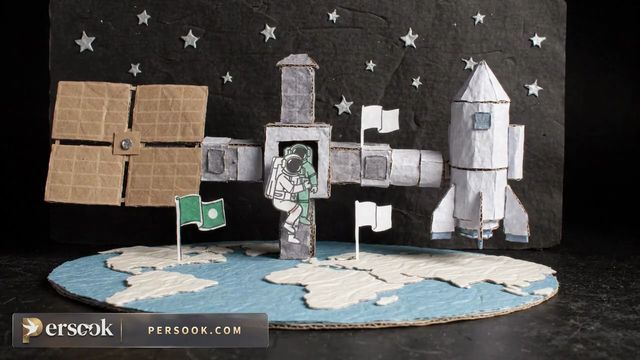
Phys.org reported on 6 November 2026 that a robotic truss builder designed and built by Caltech researchers has constructed a structure in space without help from astronauts, a first. The project, called ASTRA, is part of DARPA's NOM4D program. An autonomous manipulator picks up struts and joints from nearby dispensers and repeatedly assembles identical sections, or bays, of a perimeter truss.
The aim is to build a 1.4-meter-diameter reflector antenna from composite fiber tubes, aluminum joints and a Kapton reflective surface. ASTRA launched on 30 March 2026 from Vandenberg Space Force Base. It was one of 10 payloads on Momentus Inc.'s Vigoride 7 vehicle, which flew on SpaceX's Transporter-16 mission to low Earth orbit. The payload is roughly 1 cubic meter in size. It carried two prebuilt bays, and the team commanded it from the ground to build the third.
The team faced many unforeseen problems and tested fixes on a twin flight spare in Caltech's lab. A full truss needs 11 bays. With the mission due to end in December, the team was only able to build the initial section. They say the demonstration still shows the approach is viable, though the design needs to be simplified and refined.
Team leader Sergio Pellegrino said the work could help astronomy, communications and large solar arrays for space solar power. DARPA's Andrew Detor said NOM4D aims for structures hundreds of meters or kilometers across.