
NASA's Roman Space Telescope Exceeds Predictions by Nearly 30% After Hair-Width Mirror Tweak
Engineers revealed that the Nancy Grace Roman Space Telescope, launched in August 2026, achieved image sharpness nearly 30% better than required after adjusting its secondary mirror by just one-sixteenth the width of a human hair.
NASA announced on October 17, 2026, that the Nancy Grace Roman Space Telescope — launched on August 30, 2026 — has surpassed all engineering predictions. The telescope's Wide Field Instrument measured just 63 nanometres of optical error (root mean square), well under the original 90-nanometre requirement, making its imaging about 30% sharper than planned. The improvement was partly achieved by moving the secondary mirror by one-sixteenth the width of a human hair — an adjustment that, scaled to the height of the Empire State Building, would equal less than the thickness of a single penny. Both the Wide Field Instrument and the Coronagraph Instrument are meeting or exceeding their expected performance levels. The coronagraph has already captured images of stars in the Large Magellanic Cloud, confirming it can produce focused observations. Engineers tested 18 detectors, calibration systems, alignment mechanisms, and thermal controls during the telescope's commissioning. Roman is designed to investigate dark matter, dark energy, and exoplanets through wide-field sky surveys. It remains on track to release its first science images in early 2027.
More from this edition

Japan Launches Historic First Round-Trip Mission to Mars' Moon Phobos
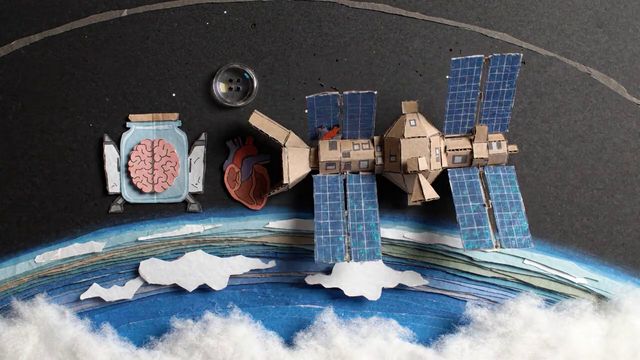
SpaceX Delivers Miniature Brain Models, 3D Heart Tissue and Artificial-Retina Equipment to Space Station

AI System Doubles Weather Forecast Accuracy Out to Six Weeks Ahead, Study in Nature Finds

AI Safety Researchers Find Chinese Model GLM-5.3 Reasoning Unprompted About Its Own Future Training