
ESA's Euclid Telescope Makes an Unexpected Discovery: Its First Comet
The European Space Agency's Euclid space telescope, designed to map dark matter and distant galaxies, has stumbled upon a previously unknown comet located 1.3 billion kilometres from Earth — its very first solar-system discovery.
ESA's Euclid space telescope, launched in 2023 to chart the dark universe, has made a serendipitous discovery: a brand-new comet, now designated C/2026 S1 (Euclid), found in images the spacecraft captured between 16 and 24 September 2026. The comet sits approximately 1.3 billion kilometres from Earth — roughly between the orbital distances of Jupiter and Saturn — and was first spotted by Finnish researcher Mikko Pöntinen of the University of Helsinki, who developed custom moving-object detection software to monitor small solar-system bodies in Euclid's images. After identifying the fuzzy, cloud-shrouded object in five separate image sets, Pöntinen reported it to the International Astronomical Union's Minor Planet Center, which confirmed the discovery on 8 October 2026. The find is particularly striking because Euclid deliberately avoids the asteroid-rich plane of the solar system in its survey strategy, making a comet detection there unexpected. The comet orbits the Sun over a period of thousands of years and is not suitable as a target for ESA's planned Comet Interceptor mission, but the episode validated operational coordination procedures between the two missions. Scientists called it a reminder that wide-field space observatories can yield surprising solar-system science as a by-product of their primary missions.
More from this edition

Solo Hacker Uses AI Agents to Breach 100+ Companies for Just $5,000

Earth's Climate Is 'Reaching Its Limits': Seven Vital Signs Hit Record Extremes in 2026
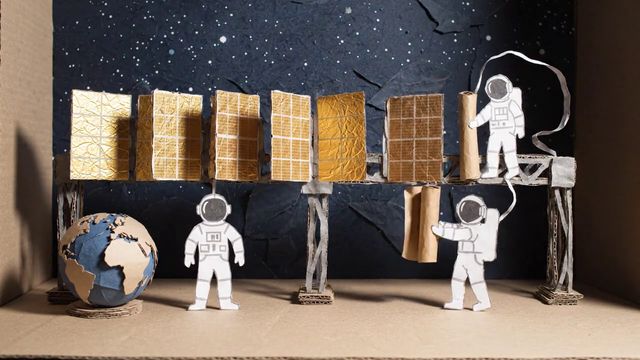
NASA Confirms Final Two ISS Solar Array Spacewalks to Complete Station Power Upgrade

ISS Crew 3D-Prints Blood Vessels and Grows Brain Tissue in Space