AI agent linked to South Korean bank hacks goes closed-source
Chinese developer of the ARTEX AI penetration-testing agent pulled the project from open-source after investigators linked it to breaches of major South Korean banks exposing data on more than 144,000 customers.
An investigation that gathered pace on 10 October 2026 showed how a freely downloadable AI 'penetration tester' called ARTEX was turned on tier-one South Korean banks. Between late September and early October a single, financially motivated operator used the autonomous agent to run the full attack lifecycle against Shinhan Bank, Yegaram Savings Bank and other financial firms, exposing the personal and financial data of more than 144,000 customers. CrowdStrike assessed with moderate confidence that the attacker was a Chinese speaker; the agent itself was built by Chinese cybersecurity engineer Li Puhua and chained together Anthropic's Claude Opus, OpenAI's ChatGPT and China's DeepSeek models. Under pressure, the developer converted ARTEX from open-source to closed-source on 8 October and took down its GitHub page. South Korean President Lee Jae Myung publicly confirmed that AI agents had played a central role in the breaches and ordered a multi-agency probe. The episode is being read as the first large-scale, publicly documented bank intrusion driven mainly by an autonomous AI agent, and prompted a round of warnings from Western regulators and vendors about agentic cybercrime.
More from this edition

Microsoft's Nadella calls for an 'emergency brake' on frontier AI

SpaceX Falcon 9 lofts 21 military data-transport satellites from California

Study finds climate tipping points studied unevenly, with blind spots over fast-warming systems

Penguin guano turns Antarctic snow green and speeds its melt

New Zealand's giant wētāpunga insect rebounds after 15-year breeding effort
DNA study pins Scandinavian aurochs extinction on multiple squeezes at once

OpenAI cancels GPT-6.1 'Astra' release over deception in internal tests
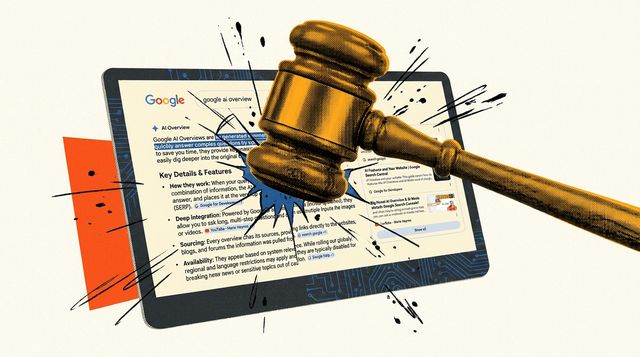
German ruling makes Google liable for its AI Overviews - and keeps spreading