ESA's Hera Spacecraft Closes In on Dimorphos to Investigate DART Impact
Written by AI from sciencedaily.com's report. Not checked by a person.
Europe's Hera spacecraft has captured its first image showing Dimorphos and Didymos as two distinct objects, marking a key step in its mission to examine what NASA's 2022 DART collision did to the small asteroid.
The European Space Agency's Hera spacecraft has reached a significant milestone as it approaches the Didymos binary asteroid system, obtaining the first image that separates Dimorphos from its larger companion rather than showing them as a single point of light. The picture was taken on October 18 using Hera's black-and-white Asteroid Framing Camera while the spacecraft was roughly 1,280 kilometres from its targets; the pair currently sits about 197 million kilometres from Earth.
To manage the approach, Hera fired its thrusters twice in October, with the two manoeuvres spaced about one week apart. The burns reduced the spacecraft's speed relative to the asteroids to just 20 metres per second. Mission manager Ian Carnelli said the team was "seeing through Hera's own eyes the very double asteroid system that the mission was designed and built for," and that first detailed images of Dimorphos are expected on 25 November.
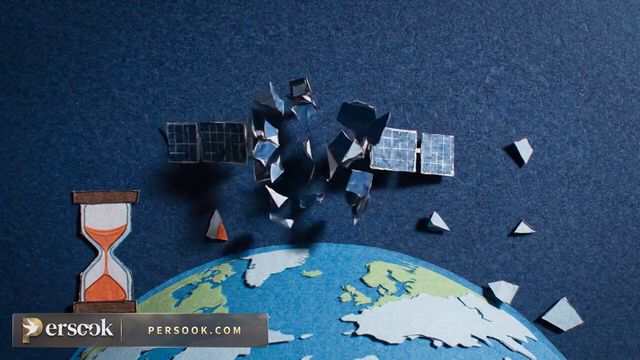
Hera's main purpose is to investigate the outcome of NASA's Double Asteroid Redirection Test (DART), which deliberately struck Dimorphos on September 26, 2022, at approximately 6.1 kilometres per second. The collision shortened the asteroid's orbital period around Didymos by roughly 33 minutes — considerably more than computer models had predicted. Scientists still do not know whether DART left a crater or significantly altered the asteroid's shape, and they need more precise data on its mass, composition, and internal structure to understand why the impact was so effective.
Dimorphos measures about 151 metres across; Didymos spans roughly 780 metres. During its investigation, Hera will deploy two shoebox-sized CubeSats for additional close-range observations, with landing operations also planned.