Voyager 1 Approaches Record-Breaking One-Light-Day Distance from Earth
Written by AI from sciencedaily.com's report. Not checked by a person.
NASA's Voyager 1 probe is on track to become the first human-made object to reach one light-day from Earth on November 18—meaning signals now take nearly 24 hours one-way—as the 49-year-old spacecraft battles power shortages and recent thruster failures.
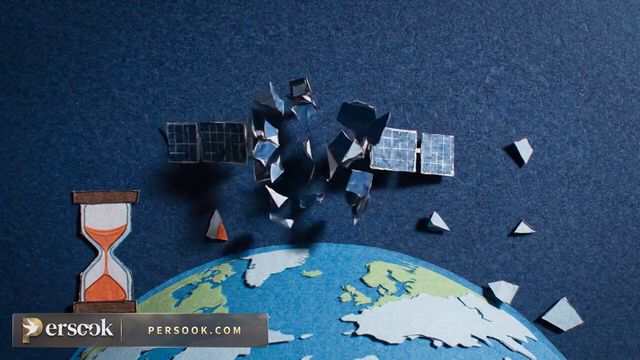
NASA's Voyager 1, launched in September 1977, is closing in on a historic threshold: one light-day from Earth, equivalent to roughly 16.09 billion miles (25.89 billion kilometres). At that distance, radio signals travelling at the speed of light take a full 24 hours to reach the spacecraft, making a round-trip communication exchange 48 hours long. The milestone is expected to occur on November 18, 2026, cementing Voyager 1 as the most distant human-made object ever. The achievement comes despite mounting challenges. In September 2026, engineers completed a power-conservation operation nicknamed the 'Big Bang,' swapping three spacecraft devices for lower-energy alternatives to extend the mission's scientific life. In mid-October, Voyager 1 suffered an unexplained 48-hour communications blackout after one set of thrusters stopped operating and the spacecraft automatically switched to backup thrusters. The probe continues to travel at roughly 38,000 mph through interstellar space and loses approximately four watts of electrical generating capacity each year from the radioactive decay of its plutonium power source. Despite these constraints, Voyager 1 remains scientifically active, returning data on the interstellar environment that no other spacecraft has ever accessed.