 Photo · sciencedaily.com
Superfluid helium qubit could slash quantum error rates 100-fold
University of Surrey physicists proposed a new qubit built on superfluid helium that calculations suggest could be about 100 times less error-prone than today's superconducting qubits.
Physicists at the University of Surrey published a design on 1 October 2026 for what they say is the first qubit based on a superfluid, a frictionless quantum liquid formed when helium is chilled to within a hair of absolute zero. The team's Superfluid Helium Oscillator Qubit (SHOQ) encodes quantum information in the collective motion of helium atoms rather than in a lone superconducting circuit, which the group argues should shield the qubit from the electromagnetic noise that dominates error rates in state-of-the-art quantum processors. Their theoretical calculations indicate the SHOQ could operate with error rates roughly 100 times lower than conventional transmon-style superconducting qubits, a step that would dramatically ease the overhead of quantum error correction and bring useful fault-tolerant machines closer. The announcement landed on a busy day for the field: D-Wave opened a beta of a 21-qubit gate-model simulator with dual-rail erasure emulation, and Alice & Bob with ENS Lyon demonstrated a DC-biased SQUID architecture for stabilising cat qubits using microvolt-scale voltages instead of microwave pumps.
More from this edition

SpaceX Crew-13 makes fastest-ever Dragon trip to the ISS
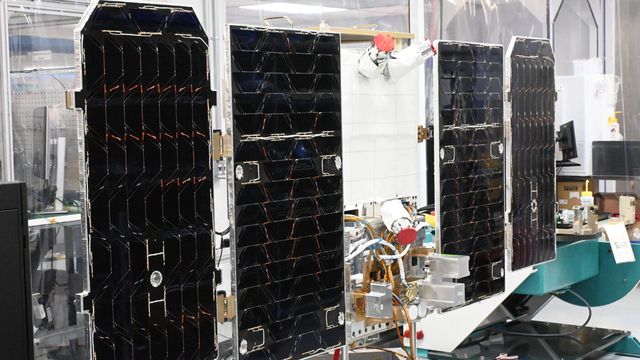
Google launches Project Suncatcher — AI chips head to orbit

OpenAI unveils GPT-6.1 Sol at DevDay 2026

Google DeepMind watermarks AI-designed proteins with SynthID Bio

Light-powered chip detects deepfakes at 98% accuracy across 15 streams

NASA picks PRIMA far-infrared telescope for new Probe Explorer class

Antarctic sea ice peaks at third-lowest maximum on record

Science News asks whether the US Southwest's 27-year megadrought will ever end