 Photo · sciencedaily.com
Light-powered chip detects deepfakes at 98% accuracy across 15 streams
UCLA researchers unveiled an optical neural processor that uses light to scan more than a dozen videos at once, flagging deepfakes with up to 97.8% accuracy.
A UCLA team led by Professor Aydogan Ozcan unveiled a light-powered artificial-intelligence system that can screen video for deepfakes with near-98% accuracy, publishing the design in the journal eLight and drawing wide coverage on 1 October 2026. Unlike conventional digital classifiers that work through frames one at a time, the device uses passive diffractive optical layers to let photons physically carry out parallel pattern-matching across many video streams simultaneously. In benchmark tests on 15 Celeb-DF clips the processor hit 97.79% overall accuracy, with 99.86% sensitivity to manipulated videos and 95.72% specificity on genuine clips; scaled to 18 concurrent streams, accuracy stayed at 96.13%. Adding two further diffractive layers tuned for harder manipulations lifted detection accuracy by about 6.8 percentage points against challenging fakes, with almost no extra energy use or processing time. Because the computation happens at the speed of light and consumes little power, the researchers pitch the chip as a high-throughput first line of defence for social platforms, broadcasters and law-enforcement labs facing an explosion of AI-generated video content.
More from this edition

SpaceX Crew-13 makes fastest-ever Dragon trip to the ISS
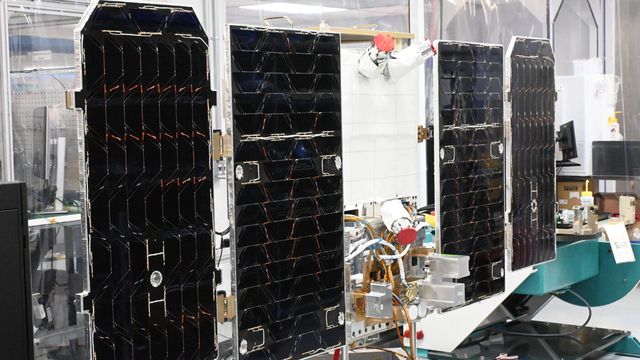
Google launches Project Suncatcher — AI chips head to orbit

OpenAI unveils GPT-6.1 Sol at DevDay 2026

Google DeepMind watermarks AI-designed proteins with SynthID Bio

Superfluid helium qubit could slash quantum error rates 100-fold

NASA picks PRIMA far-infrared telescope for new Probe Explorer class

Antarctic sea ice peaks at third-lowest maximum on record

Science News asks whether the US Southwest's 27-year megadrought will ever end