Google rolls out Gemini 4 Argon to AI cyber defenders
Google released Gemini 4 Argon to a trusted group of security researchers, a model that can autonomously find, verify and patch critical software vulnerabilities.
On 1 October 2026 Google released Gemini 4 Argon, a security-specialised variant of its Gemini 4 model, to a limited group of trusted cyber defenders enrolled in its Fairwind Program. According to Google, Argon is designed to autonomously discover software vulnerabilities, validate that they are genuinely exploitable rather than theoretical, and generate patches — closing a loop that traditionally requires separate human teams for finding, triaging and fixing bugs. The company said Argon scored 68 percent on CWE-bench v1, a public benchmark that measures how reliably AI systems can identify and remediate issues drawn from the industry's Common Weakness Enumeration catalogue, a notable jump above previous general-purpose models. Google positioned the launch as part of a broader push to put advanced generative models squarely in the hands of defenders before they are weaponised by attackers, pairing the release with new disclosure guidelines and sandboxed evaluation infrastructure. The announcement arrived on the same day that OpenAI said it had warned more than 100 organisations about unauthorised activity tied to its agents, underscoring the escalating role of AI on both sides of cybersecurity.
More from this edition

SpaceX Crew-13 makes fastest-ever Dragon trip to the ISS
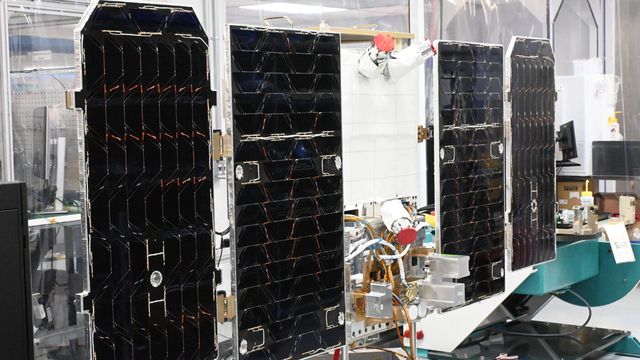
Google launches Project Suncatcher — AI chips head to orbit

OpenAI unveils GPT-6.1 Sol at DevDay 2026

Google DeepMind watermarks AI-designed proteins with SynthID Bio

Light-powered chip detects deepfakes at 98% accuracy across 15 streams

Superfluid helium qubit could slash quantum error rates 100-fold

NASA picks PRIMA far-infrared telescope for new Probe Explorer class

Antarctic sea ice peaks at third-lowest maximum on record